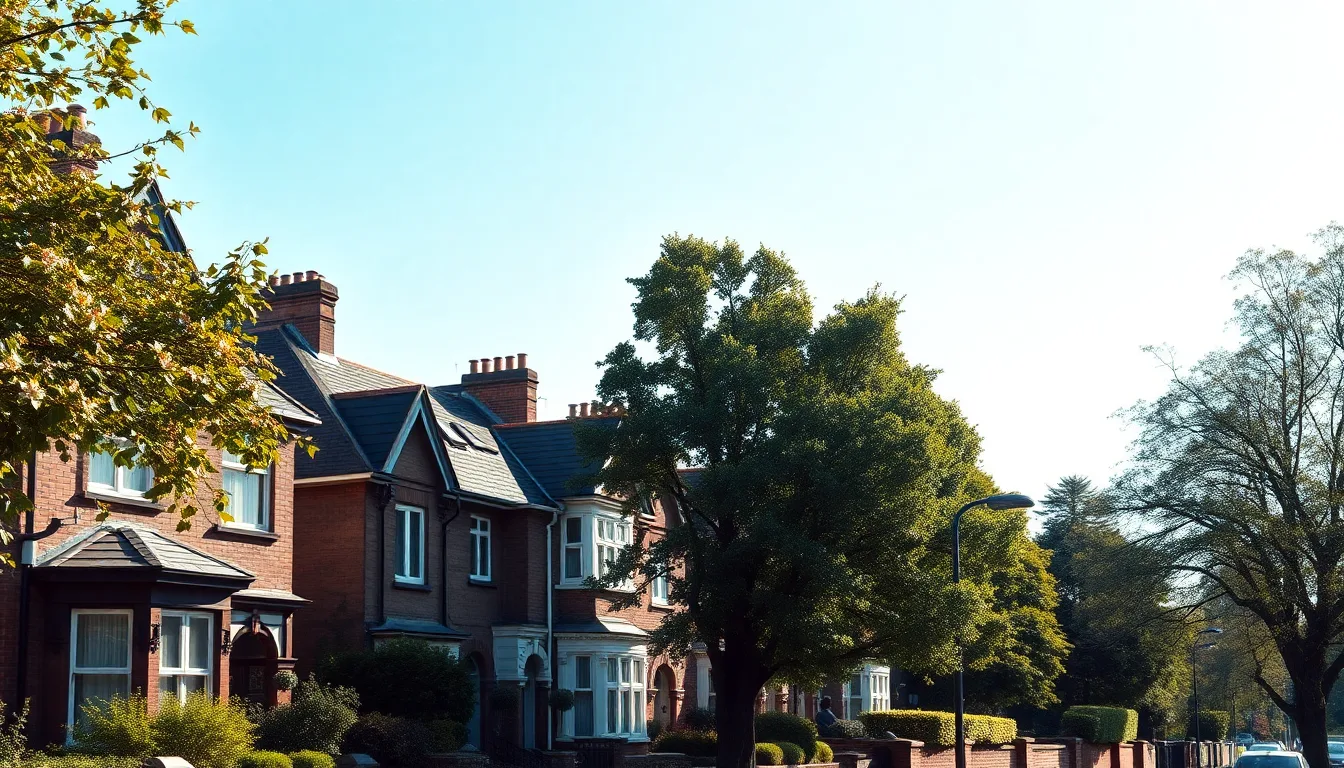
Not every roof covering can go on every roof — pitch is the reason. Tiles that perform beautifully on a steep Victorian terrace will let water straight through on a shallow extension roof. Still, that’s before wind even gets involved. Get the pitch-to-covering match wrong and you’re not choosing a style — you’re choosing a leak.
What roof pitch actually means
Pitch is the angle of a roof slope measured in degrees from horizontal. A flat roof sits at 0-10°, even though it usually has a slight fall built in for drainage. A steep traditional roof is often 40-45° or more.
Manufacturers rate every covering — clay tile, concrete tile, slate, membrane — with a minimum pitch it’s designed to work at. Fit it below that figure and you void the warranty, whatever the installer tells you.
Why the angle changes everything
Water sheds fastest off a steep slope and slowest off a shallow one. On a low pitch, rainwater has more time to work its way in. Meanwhile, wind pressure pushes it sideways and upwards under the laps between tiles or slates.
That’s capillary action and wind-driven rain working against you, not just gravity. Below a certain angle, no amount of careful laying stops water finding its way through. The covering itself has to change, not just the workmanship.
Standard and steep pitches: tiles and slate
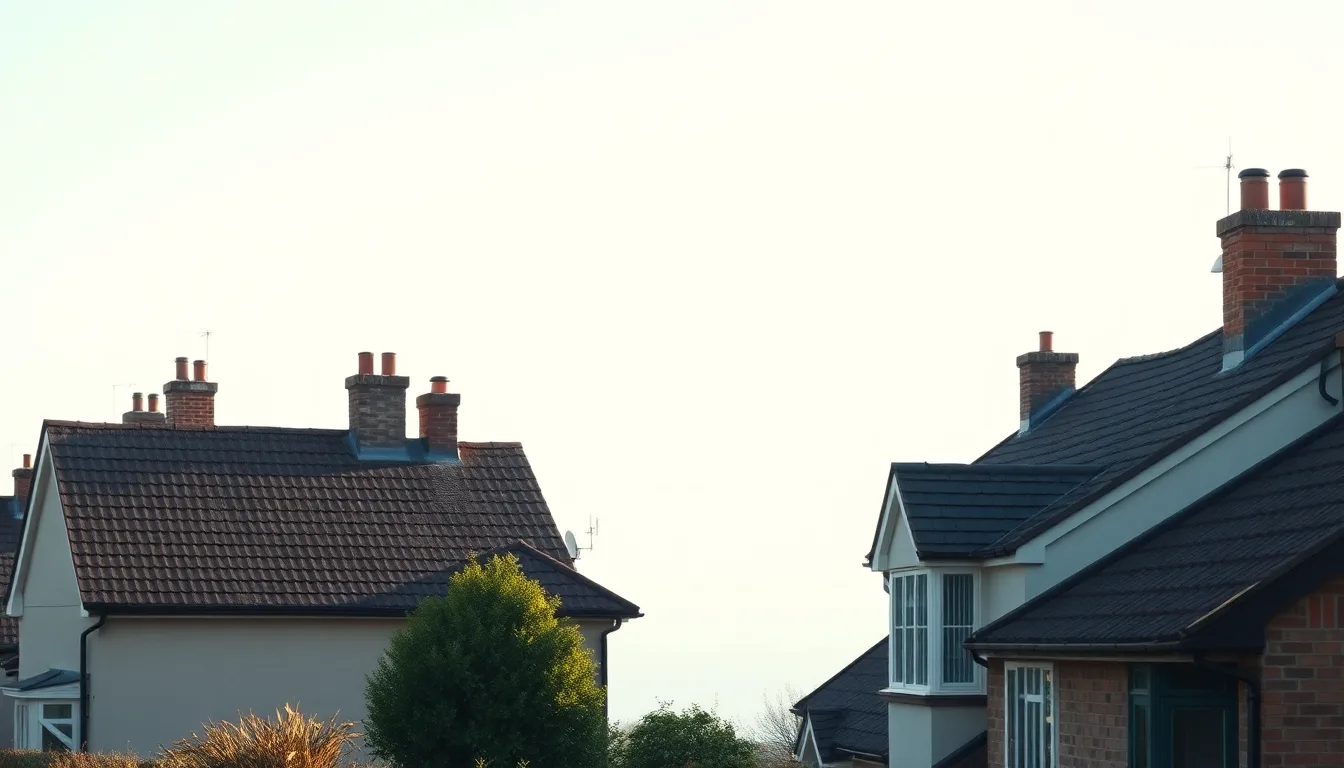
Most concrete and clay tiles need a minimum pitch of around 15-22.5°. The exact figure depends on the profile and how much overlap it gives. Natural slate is more forgiving at the low end, with some fixing methods rated to around 20°. Many installers still prefer 25°+ for a genuinely watertight result.
Steeper roofs, from roughly 30° upwards, give tiles and slate the best possible run-off. They also put more load through the battens and fixings from wind uplift. As a result, batten gauge and nail specification matter more as pitch increases, not less.
Low pitch: where the options narrow
Between roughly 10° and 20°, standard interlocking tiles start to struggle. Some manufacturers make specific low-pitch tile ranges with extra weatherproofing built into the profile. They’re not a universal fix, though, and they cost more.
Standing-seam metal roofing is a genuine option in this range, since the sealed seams don’t rely on gravity the way lapped tiles do. Fibre cement slate substitutes can also work at lower pitches than natural slate, within their own rated limits.
Flat and near-flat roofs
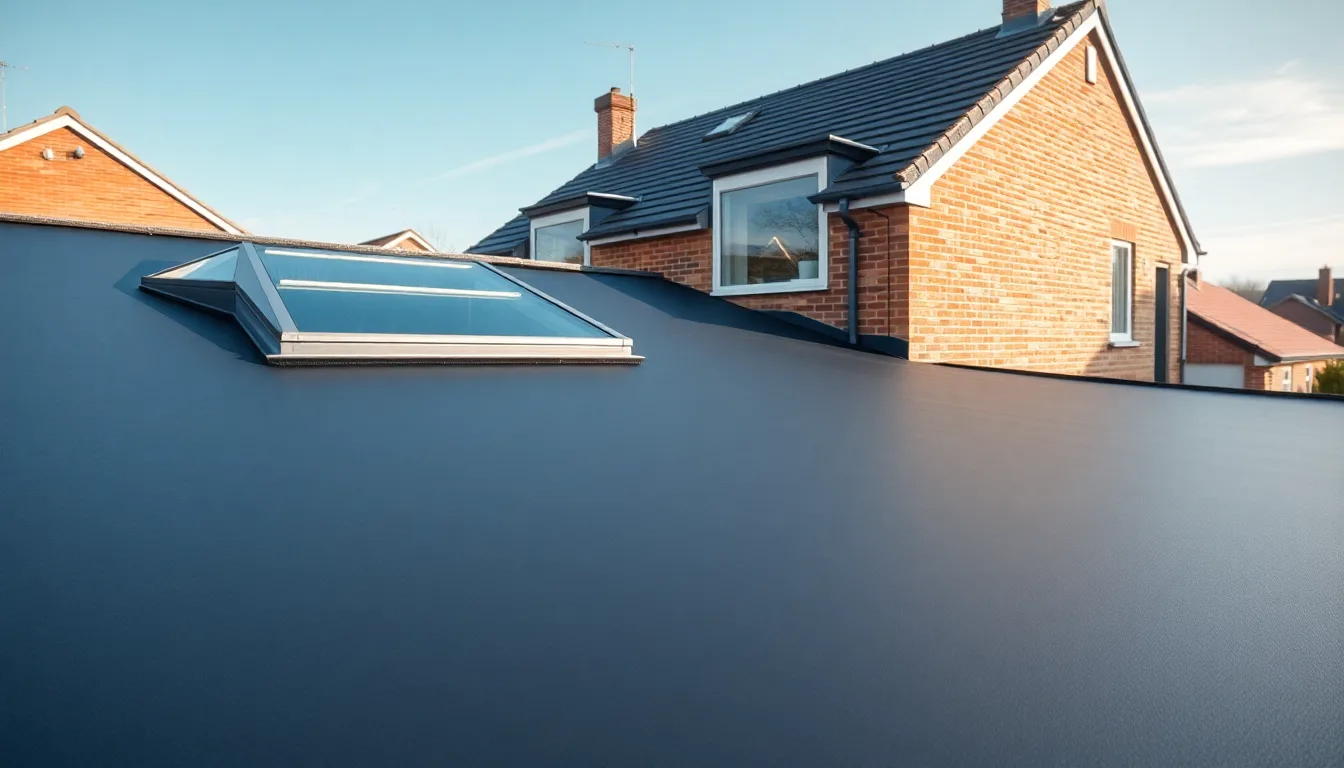
Below about 10°, you’re into flat-roof territory. The covering has to be a fully sealed membrane rather than anything laid in overlapping units. Felt (built-up bitumen), GRP fibreglass and EPDM rubber are the three systems in common use. Each has its own lifespan and cost profile.
EPDM typically runs longer before it needs attention, often 20-25 years when installed correctly, while felt systems tend to need more frequent maintenance. GRP sits in between and gives a hard, walkable surface that suits roof terraces and balconies well.
What goes wrong when pitch is ignored
The most common mistake we see is a flat-roof extension built with a pitch just under 10°. It’s then finished with tiles to match the main house for looks. It rarely lasts. Water backs up at the laps within a few winters and finds its way into the ceiling below.
The fix afterwards is always more disruptive and more expensive than choosing the right covering the first time. A short conversation about pitch before the covering is ordered avoids nearly all of it.
Re-roofing: matching covering to pitch properly
If you’re having a roof stripped back and re-covered, pitch should be the first thing checked. It shouldn’t be an afterthought once you’ve already picked a covering on style grounds. Our Re-Roofing service starts every job with a pitch survey for exactly this reason.
Insulation upgrades during a re-roof also need to meet Building Regs Part L. Additionally, extra insulation depth can occasionally affect the finished roof build-up. This can matter for pitch calculations on borderline slopes. It’s worth flagging early rather than discovering it mid-job.
Any roofer you’re vetting for this kind of work should be checked against the FMB register before you commit, since pitch-and-covering mismatches are exactly the sort of shortcut a rogue trader takes to save time.
Getting the right advice for your roof
Pitch isn’t something you can eyeball reliably from the ground. This is especially true on an extension or a roof with mixed sections at different angles. A proper survey measures it and matches the covering to what the manufacturer actually allows.
We cover this as standard on every re-roofing quote across Chelsfield & Well Hill, Orpington and Bromley, including the trickier low-pitch extensions and outbuildings that get missed on a quick look. If your roof includes a flat-roof extension bringing in natural light, our roof lanterns and skylights guide covers how that interacts with a low-pitch covering choice. For anything on a listed or conservation-area property, our roofing in a conservation area guide sets out what you can and can’t change about pitch and materials. And if you’re simply trying to work out how much life is left in what’s up there now, our how long does a roof last guide is the place to start.
Related Guides
- Single-Ply Membrane Roofing for Commercial & Industrial Buildings
- Roofing in a Conservation Area: The Rules for Chislehurst Homeowners
- Roof Lanterns & Skylights: Bringing Light Into a Flat-Roof Extension
- How Long Does a Roof Last? Tile vs Slate vs Flat Compared