A leaking flat roof rarely announces itself politely. It’s usually a damp patch on a ceiling, or a puddle that won’t drain. That’s usually what sends homeowners searching for a repair cost.
The good news is that most flat roof problems are genuinely repairable. Full replacement isn’t always necessary. This guide covers what repairs typically cost across South East London and Kent. It also compares the three common coverings, and helps you work out which situation you’re in.
Typical flat roof repair costs
Repair pricing depends heavily on what’s actually wrong and how much of the roof the problem covers. As a guide, Checkatrade’s flat roof cost data puts small, localised repairs at a few hundred pounds. More involved work can run into four figures. This includes resealing a large area, replacing a section of covering, or fixing a failed upstand.
As a rule of thumb, a targeted repair is usually the sensible option. That’s true if the damage covers less than around 30% of the roof surface. Beyond that, full replacement tends to work out better value over time.
The same goes for a covering that’s already past 20 years old. That’s because you’re not repeatedly patching a system that’s reaching the end of its useful life anyway.
That 30% guide isn’t a hard rule, though. It’s a starting point for the conversation with your roofer. A small roof with one persistent weak spot near a chimney upstand might be entirely repairable. That’s true even after several previous fixes.
By contrast, a larger roof with several failing seams could tip the balance towards replacement sooner. That’s why a proper inspection matters more than trying to estimate from the ground.
How felt, EPDM and GRP repair costs compare
Felt
Felt is the most common covering on older flat roofs in this area. It’s also usually the cheapest to repair. That’s because we can cut out damaged sections and torch or bond on a new layer. This doesn’t disturb the rest of the roof.
However, felt is more prone to splitting and blistering as it ages. That’s particularly true where UV exposure has made it brittle. As a result, a felt roof approaching 15-20 years old may need more frequent repairs. A newer covering typically needs less attention.
EPDM
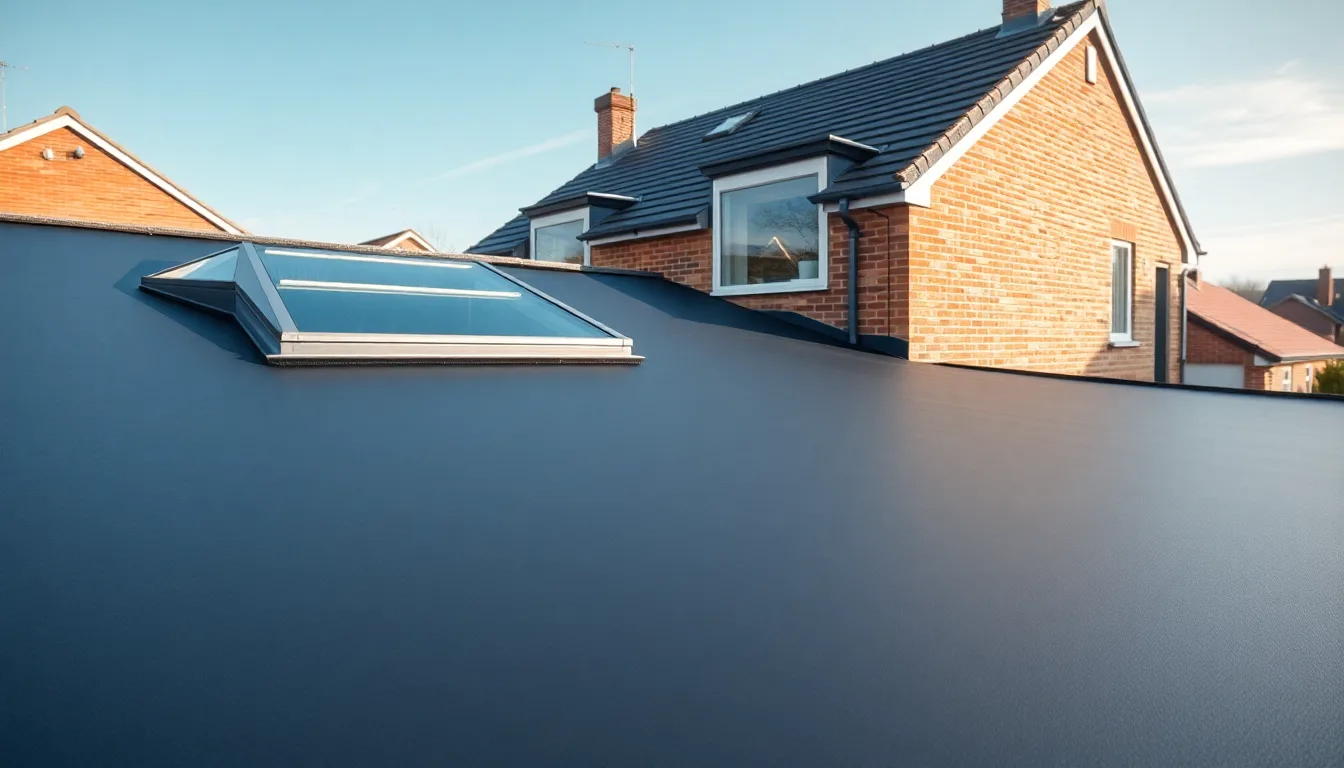
EPDM is a rubber membrane. It’s a single continuous sheet with far fewer joints than felt. That means it tends to need repairing less often in the first place.
When it does need attention, a compatible adhesive and repair tape can usually help. That patches small punctures or seam separations. That keeps the job relatively contained.
EPDM’s flexibility also helps. It copes well with the slight movement flat roof decks experience over the seasons. That’s one reason failures tend to be less frequent.
GRP (fibreglass)
GRP is a rigid, seamless laminate. So repairs typically involve grinding back the damaged area, re-laminating, and applying a fresh top coat. This is more labour-intensive than a felt or EPDM patch, which the price reflects. Still, a well-installed GRP roof also tends to need less repair work than felt. That holds across a comparable lifespan.
When repair is enough — and when it isn’t
A repair makes sense when the damage stays localised. That might mean a cracked upstand or a split seam. It could be a patch of ponding that’s caused a leak, or storm damage to one corner.
Our flat roofing team deals with these kinds of issues regularly across Bromley, Beckenham and Chislehurst. In most cases, a same-day or next-day repair resolves it without disturbing the rest of the roof.
Replacement becomes the better call when the covering is failing in multiple places at once. The same applies when the roof is well past the typical lifespan for its material. It’s also the better call when repeated repairs start to add up.
At that point, the cost can add up to a meaningful fraction of a full recover anyway. Similarly, it’s worth replacing rather than repairing if prolonged water ingress has affected the underlying deck. No surface repair fixes rotten timber underneath.
Getting an honest assessment
Repair and replacement costs sit so close together on some jobs. Ask any roofer to explain their reasoning, rather than just accepting a recommendation at face value. A good contractor will show you the damage.
They’ll explain why it does or doesn’t extend further than it looks. They should also give you a repair quote alongside a replacement one. That way, you can weigh them up yourself.
Simple maintenance that reduces repair bills
A surprising amount of flat roof damage is preventable rather than inevitable. Keeping outlets and gutters clear of leaves and debris helps. It stops water pooling on the surface for longer than it should. Standing water is one of the most common causes of premature membrane failure.
Similarly, an annual visual check helps — whether it’s your own, or part of a maintenance visit. It catches issues like a lifting edge or a hairline seam split. At that stage, they’re still a five-minute fix.
That’s better than waiting for a wet winter to turn them into a ceiling stain. This small amount of upkeep is usually far cheaper than the repair it prevents.
Summary
Most flat roof problems in South East London and Kent are repairable. Doing so promptly is usually far cheaper than letting a small leak turn into a bigger one. If your flat roof needs attention, get a free quote. We’ll tell you honestly whether it’s a repair job or time to talk about replacement.