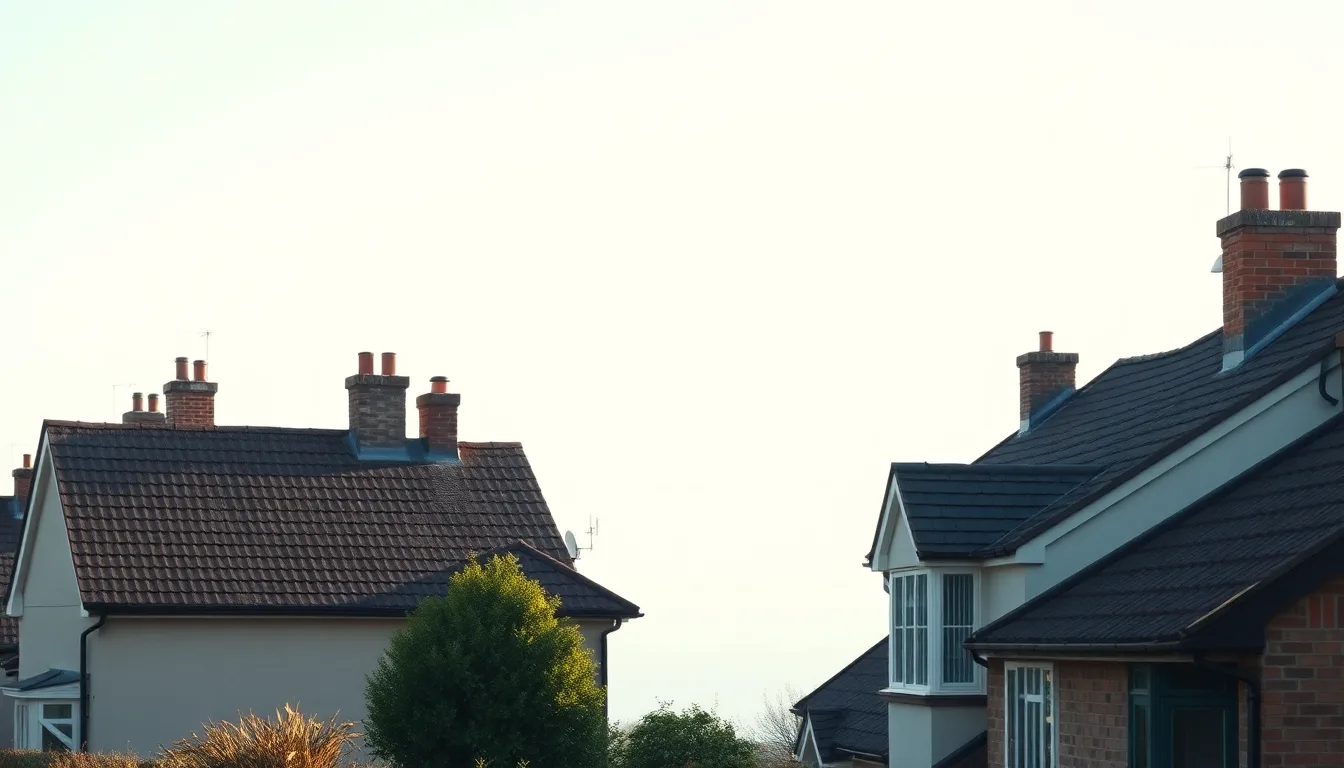
A chimney stack takes more weather than almost any other part of a house, since it sits highest on the roofline, fully exposed on all sides. That’s why the mortar between its bricks usually fails first, often years before the roof covering needs any attention.
A failing chimney is also a common cause of a hidden roof leak. So knowing the warning signs, and roughly what a repair should cost, helps you catch the problem while it’s still a straightforward job.
This guide covers the signs that a chimney needs repointing, and what it typically costs across South East London and Kent. It also covers what the process actually involves, and why chimney flashing is so often the real culprit behind a “roof” leak.
What Repointing Actually Means
Repointing means raking out old, crumbling mortar from between the bricks. Fresh mortar then replaces it. We mix and finish the new material to match the original joint profile as closely as possible.
It is not the same as rebuilding a chimney — that’s a bigger job reserved for stacks that have become structurally unstable. On most chimneys, though, repointing the top few courses is enough. Adding the “flaunching” (the mortar collar around the base of the pots) makes the stack watertight and sound again.
Mortar mix matters more than it might seem. Older properties, particularly pre-1919 solid-wall houses common across Bromley and Chislehurst, were built with lime mortar. It’s softer and more flexible than modern cement-based mixes.
Repointing an old chimney with the wrong, harder mortar can trap moisture in the brickwork. That accelerates frost damage. So matching the original mix is a detail worth asking your roofer about, rather than assuming any mortar will do.
Signs Your Chimney Needs Attention
A chimney rarely fails suddenly. Instead, it tends to show a build-up of smaller signs over a few wet seasons. Watch for these:
- Mortar joints that look recessed, crumbly, or have visibly washed away between the bricks
- Small pieces of mortar or brick debris found in the guttering or on the ground near the base of the house
- A powdery white residue on the brickwork (efflorescence), which points to water moving through the masonry
- Damp patches on a chimney breast inside the house, particularly in a loft or top-floor bedroom
- Visibly leaning or bulging brickwork, which is a more urgent structural sign rather than routine weathering
- Cracked or missing flaunching around the chimney pots
If you notice any of the more serious signs — leaning brickwork or a chimney that looks visibly out of true — treat it as a priority. Don’t leave it until the next routine inspection.
What Repointing Typically Costs
Costs vary a fair amount depending on chimney size, roof pitch, and — most significantly — how it needs to be accessed. According to Checkatrade’s 2026 cost guide, a small chimney on a low-level roof can cost around £300 to repoint. That rises to roughly £600–£900 for a two-storey house where scaffolding is needed.
It can reach £1,000–£1,200 when the job needs a lime mortar mix or more extensive access. As a general guide, expect these figures to sit at the higher end across London and the South East. Labour costs and scaffolding hire both tend to run above the UK average here.
Scaffolding is usually the single biggest factor in the final price. A ladder or tower alone often can’t safely reach a chimney stack sitting mid-roof or over a ridge. Still, other roof work carried out at the same time — a full re-roof, for example — often makes repointing worth doing in the same visit. That way, you only pay the access cost once.
The Repair Process, Step by Step
A typical repointing job follows a consistent sequence, regardless of chimney size:
1. Access and inspection
Scaffolding or another safe access method goes up first. A close inspection of the stack, pots, and flaunching follows to confirm the full scope of work. A chimney that looks fine from the ground can still reveal more extensive damage on closer inspection.
2. Raking out old mortar
We carefully remove failed mortar to a consistent depth, while taking care not to damage the surrounding brick faces.
3. Repointing
We mix fresh mortar to match the original — lime or cement-based, depending on the property’s age. Then we pack it into the joints and finish it to match the existing profile.
4. Flaunching and flashing check
We renew the mortar collar around the pots if needed. We also inspect the lead flashing where the chimney meets the roof covering. This matters because even a perfectly repointed chimney will still let water in if the flashing at its base has failed.
5. Clean-down and sign-off
We clear debris once we finish the work. On a listed building or one in a conservation area, stick to like-for-like repairs. Minor repointing using matching materials generally doesn’t require separate consent. Still, it’s always worth checking with the local planning authority first if the property is listed, or if the works go beyond simple repointing.
Why Chimneys Cause So Many “Roof” Leaks
It’s a common misconception that a leak near a chimney means the roof covering itself has failed. In practice, the junction between a chimney and the roof is one of the most failure-prone points on any house. That’s because it relies on lead flashing to bridge two different materials — brick and tile, or brick and slate.
These materials expand and move differently over time. Once that flashing cracks, lifts, or a build-up of moss and debris bridges it, water tracks down inside the chimney breast or along a roof timber. It can then appear as a stain in a room that’s nowhere near the actual chimney.
This is why a competent inspection always checks the flashing alongside the pointing itself. Repointing a chimney beautifully while leaving cracked flashing in place solves only half the problem.
FAQ
How often does a chimney need repointing? There’s no fixed interval — it depends on the mortar type, the chimney’s exposure, and the local weather. As a rough guide, cement-pointed chimneys on exposed sites may need attention every 15–20 years, while poorly matched repairs can fail much sooner.
Can I repoint a chimney myself? Working at height on a chimney is genuinely hazardous. Getting the mortar mix wrong on an older property can also cause more harm than good. A roofer who can check the flashing and flaunching at the same time should handle this job.
Does a leaning chimney always need a full rebuild? Not necessarily. Some lean is cosmetic and structurally sound. But a professional should always assess a chimney that has visibly moved, before you assume a simple repoint will fix it.
Covering Bromley, Chislehurst, Sidcup and the surrounding area, our roof repairs team can assess a chimney and the roof around it in the same visit. Get a free quote to get a proper inspection booked in.
Related Guides
- Loft Conversion Cost Guide for Orpington & Bromley Homes
- Do You Need Planning Permission for a Loft Conversion?
- How Long Does a Roof Last? Tile vs Slate vs Flat Compared
- How to Choose a Roofer & Avoid Rogue Traders: An FMB Checklist
- How Much Value Does a Loft Conversion Add to Your Home?
- How Much Does a New Roof Cost in Orpington & Bromley? A 2026 Price Guide