A damp patch on the ceiling rarely shows up at a convenient time. It often appears during a downpour, on a Sunday evening, or right after you’ve redecorated. However, most roof leaks give warning signs before they become an emergency.
Knowing what to look for matters. So does knowing what to do in the first hour after you spot one. That knowledge can save you from a much bigger repair bill.
This guide covers three things. First, the early signs of a leak. Then, the safe first steps while you wait for help. Finally, how to describe the problem so a roofer arrives faster and better prepared.
Early Warning Signs You Shouldn’t Ignore
A leak rarely starts as an obvious drip. More often, it begins as a small discolouration on a ceiling or wall. This looks like a yellowish or brownish ring.
It grows slowly after each spell of wet weather. Water tends to travel sideways along joists and battens before it drips down. Because of that, the stain on your ceiling is not always directly below where the water gets in. That is one reason DIY leak-chasing so often ends in frustration.
Other signs to watch for include:
- A musty smell in a loft space or top-floor room, even without a visible stain
- Peeling paint or bubbling wallpaper near the ceiling line
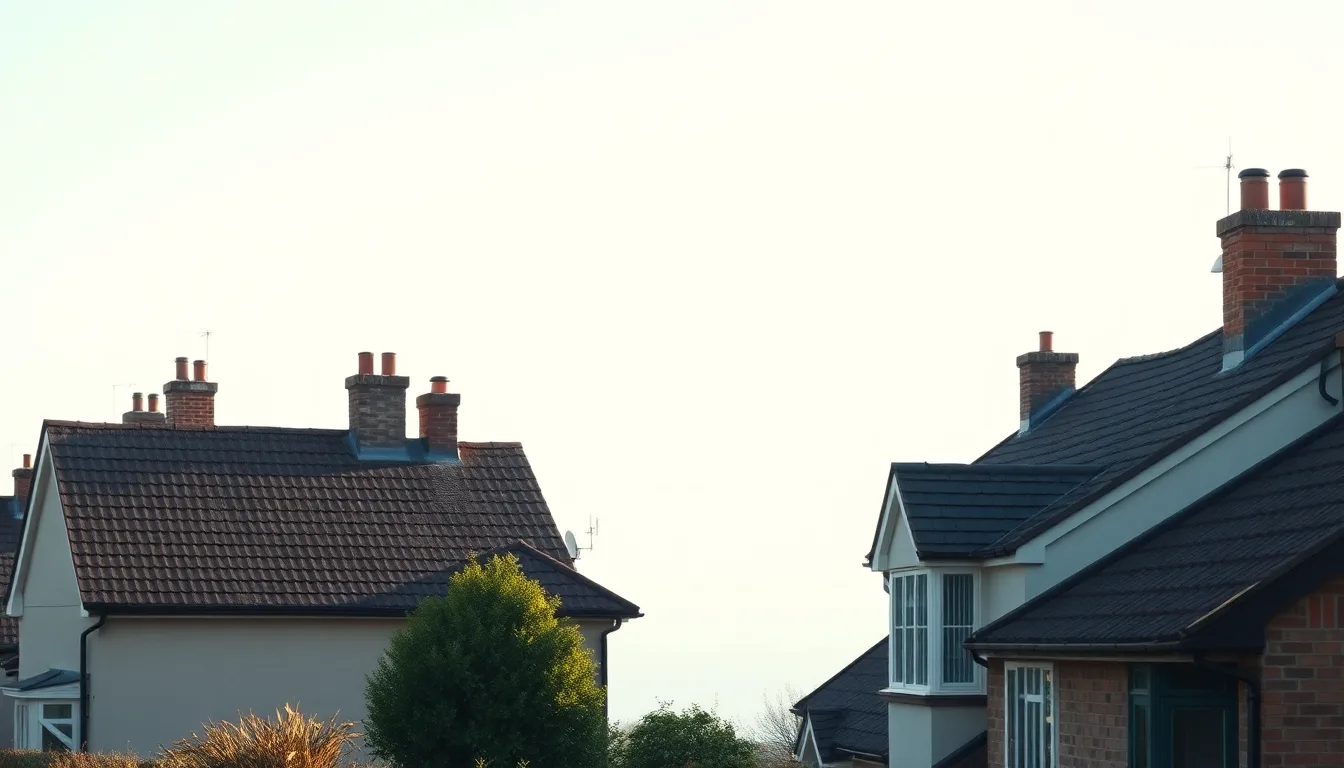
- Missing, cracked or slipped roof tiles visible from ground level
- Daylight showing through the roof felt when you look up into the loft
- Damp or discoloured insulation in the loft after rain
- Green staining or moss build-up around a specific area of the roof, which can hold moisture against the covering
Additionally, check your loft after strong wind or heavy rain. Do this even if nothing looks wrong from inside the house. Catching a small area of damp felt or a slipped tile early makes a big difference.
Deal with it before it reaches the ceiling below. That’s usually a same-day repair, not a full ceiling replacement.
What to Do the Moment You Spot a Leak
Once you notice water coming in, limit the damage safely. Don’t climb onto a wet roof or start pulling ceilings apart. A few sensible steps make a real difference:
Contain the water
Place a bucket or bowl under the drip. If the ceiling is bulging with trapped water, act fast. Pierce it carefully at the lowest point with something narrow, like a screwdriver.
Then direct the flow into a container below. This sounds counter-intuitive. But a small, controlled hole causes far less damage than a full collapse. A section of plasterboard can give way under the weight of trapped water.
Move anything valuable
Shift furniture, electronics and belongings away from the affected area. If water is dripping near a light fitting or socket, treat it as a safety issue. Switch off the electricity supply to that circuit at the consumer unit. Don’t risk it, and avoid touching switches with wet hands.
Photograph everything
Take clear photos of the stain and the drip. If it’s safe to see from ground level, photograph any obvious roof damage too. This could be a displaced tile or damaged flashing.
As a result, you’ll have a useful record for the roofer diagnosing the problem. It also helps if the damage is significant enough for a home insurance claim. According to the Association of British Insurers, insurers expect homeowners to act promptly and keep on top of maintenance. So documenting the issue and getting it looked at quickly also supports any future claim.
Don’t go up on the roof yourself
It can be tempting to grab a ladder and take a look. This is especially true if you can see a loose tile from the garden. Still, wet or moss-covered roofs are genuinely dangerous underfoot.
A fall is a far worse outcome than a delayed repair. Leave the roof inspection to someone with the right access equipment and training.
Describing the Problem to Get Faster Help
When you contact a roofer, the details you give up front matter. They help the right person, with the right materials, turn up quickly. Useful information includes:
- Roughly where the water is coming through (which room, which corner, near a chimney or valley if you can tell)
- Whether the leak appeared suddenly during a storm or has been getting slowly worse
- Roof covering type if you know it — slate, concrete tile, or a flat roof section — because this changes what materials and access equipment are needed
- Any visible external damage, ideally with a photo attached
- Whether the leak is near a chimney, roof light, or where a flat roof section meets a pitched one, since these junctions are common failure points
A leak that traces back to a chimney is one of the most frequent causes of water ingress. We see this often in the older homes across Orpington and the surrounding Kent villages. This is often down to failed flashing or deteriorating mortar, rather than the chimney stack itself.
Meanwhile, valleys, roof lights, and the joints between flat and pitched sections are the other usual suspects. A competent roofer will check these first, rather than assuming the whole covering has failed.
When It’s a Genuine Emergency
Not every leak needs a same-day callout, but some situations do. Water coming through a light fitting is one. A ceiling that’s visibly sagging under trapped water is another.
So is a section of roof covering that has clearly blown off in a storm. These all warrant urgent attention, not a routine appointment. Our emergency roofing team covers exactly these situations.
We prioritise making the property safe and watertight first. A permanent repair follows once the immediate risk is dealt with.
For less urgent leaks, such as a small stain that isn’t growing, a scheduled inspection is usually best. That’s because it allows time to properly trace the source, rather than patching blind.
FAQ
Will a small ceiling stain go away on its own? No. Even if a stain stops growing once the rain clears, the leak’s source is still there. It will act up again in the next heavy downpour. It’s worth getting checked before it causes hidden damage to timber or insulation.
Can I use roofing sealant myself as a temporary fix? For most homeowners, getting onto a roof isn’t safe. A poorly applied sealant can also trap moisture rather than direct it away. If you can reach the area safely from the loft side, that’s a good option.
Cover exposed insulation with a plastic sheet as a reasonable stop-gap. Anything on the roof itself is best left to a professional.
How quickly should I expect a roofer to respond? This depends on the severity. A sagging ceiling or active water ingress into a room should be treated as urgent. Meanwhile, a slow, contained drip can usually wait for a scheduled visit within a few days.
If you’ve spotted a leak anywhere across St Mary Cray or the wider Bromley area, get a free quote. We’ll talk you through next steps before anyone even sets foot on a ladder.