If you’ve started researching flat roof coverings, you’ve probably noticed there isn’t one single “best” answer. Each of the four common systems has a real trade-off. You gain on cost, lifespan or upkeep, but rarely all three at once. This guide compares EPDM, GRP, felt and single-ply, honestly and side by side. Use it to weigh cost against lifespan for your own project. Still, don’t just take a contractor’s word for it.
Felt
Felt is the oldest flat roofing material, and usually the cheapest. That’s why you still see it on so many older extensions and garages. Material and labour costs sit at the low end of the market. This makes felt attractive for smaller jobs and tighter budgets.
Lifespan is the trade-off, though. Traditional torch-on felt tends to last around 15-20 years before it needs attention. A modern, high-quality two-layer system, installed properly, can push well beyond that.
Felt is also more prone to splitting and UV damage than the newer alternatives. So it needs more frequent inspection as it ages.
Best for: budget-conscious jobs on garages, sheds and smaller extensions where a shorter lifespan is an acceptable trade-off for lower cost.
EPDM (rubber)
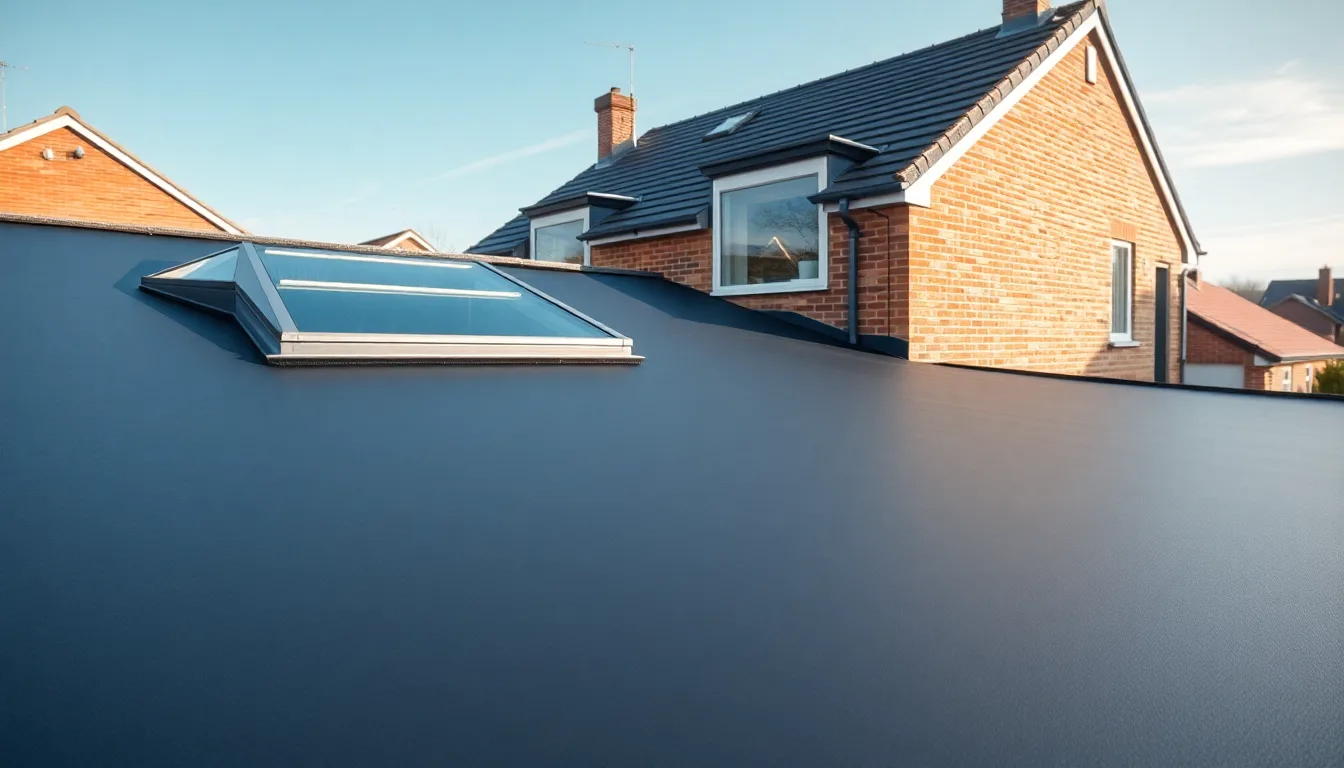
EPDM is a synthetic rubber membrane. Over the past decade it’s become the default recommendation for most domestic flat roofs, and for good reason. Firestone/Elevate — one of the longest-established EPDM manufacturers — publishes a life expectancy of more than 50 years for properly installed RubberGard EPDM.
The material contains no plasticisers, so it doesn’t turn brittle the way older felt does. In practice, most UK domestic installations see realistic service lives of 25-40 years. That’s still a big step up from felt.
Suppliers deliver EPDM in large single sheets, so it has far fewer joints than felt. Fewer joints generally mean fewer places for a leak to start.
Best for: most standard flat roof replacements — extensions, dormers, garage roofs — where you want a long-lasting, low-maintenance covering without paying a premium price.
GRP (fibreglass)
GRP, also known as fibreglass roofing, creates a rigid, fully bonded, seamless surface. It’s popular on balconies and roof terraces, and anywhere else that gets foot traffic. That’s because it’s tougher underfoot than a rubber or felt membrane. Manufacturer guarantees on certified GRP systems typically run to 15-25 years.
A well-installed system can perform for 30-40 years or more, with occasional re-top-coating. The trade-off is installation. Installers have to laminate GRP on site, in the right weather conditions. That makes it more labour-intensive — and usually more expensive — than EPDM for a comparable area.
Best for: roof terraces, balconies and any flat roof area that needs to be walked on regularly, where GRP’s rigid, hard-wearing surface earns its higher price.
Single-ply membrane
Single-ply covers a family of synthetic membrane systems. It’s distinct from EPDM, though people sometimes group it alongside it. Contractors mechanically fix these membranes, or fully adhere them, in large sheets. Roofers use them widely on larger flat and low-pitch roofs, both domestic and commercial.
These systems typically carry manufacturer-backed guarantees in a similar range to EPDM. Some premium systems are specified for 25-40+ years of service. As with any membrane system, longevity depends heavily on correct detailing at upstands, outlets and roof edges. In particular, a well-detailed single-ply roof will comfortably outlast a poorly detailed one, whatever the material’s theoretical lifespan.
Best for: larger flat roof areas, extensions with more complex detailing (multiple upstands, rooflights, outlets), or where a specific insurance-backed guarantee is required.
How to choose
In practice, the decision usually comes down to three questions: how long do you want the roof to last, how much foot traffic will it see, and what’s the budget?
For a straightforward extension roof, EPDM is generally the sensible default. It’s long-lasting, relatively affordable and low-maintenance. For a terrace or balcony, GRP’s hard-wearing surface is usually worth the extra cost. Felt remains a reasonable choice for smaller, lower-budget projects. Still, single-ply comes into its own on larger or more complex roofs.
Whichever system you’re considering, ask your roofer which manufacturer’s system they’re approved to install. A manufacturer-backed guarantee is only valid when a certified installer fits it. Our flat roofing team works across Sidcup, Bickley and Petts Wood. We can talk you through which system suits your specific roof.
FAQ
Is EPDM better than felt? For most domestic roofs, yes. EPDM generally lasts longer and needs less maintenance. Felt remains a valid lower-cost option for smaller projects, though.
Can I walk on an EPDM roof? Occasional access is fine, while EPDM isn’t designed for regular foot traffic the way GRP is. If you need a walkable terrace, GRP is usually the better choice.
Do all these systems need the same maintenance? Roughly, yes. An annual visual check, and keeping outlets clear of debris, extends the life of any flat roof covering — whatever the material.
If you’re weighing up materials for an upcoming project, get a free quote and we’ll recommend the system that actually fits your roof and budget.
Related Guides
- A Homeowner’s Roof Maintenance Checklist (Season by Season)
- Does Home Insurance Cover Roof Replacement or Storm Damage in the UK?
- How to Spot a Roof Leak — and What to Do Before the Roofer Arrives
- How Much Value Does a Loft Conversion Add to Your Home?
- Moss on Your Roof: Should You Remove It, and How?