Lead flashing rarely gets a second glance until something goes wrong. Then it’s usually the reason there’s a damp patch spreading across a bedroom ceiling. It’s the strip of metal sealing every point where a roof meets something upright — a chimney, a wall, a dormer. Still, fitted properly, it can outlast the roof covering around it by decades.
What Lead Flashing Actually Does
A roof covering sheds water in one direction, down a slope. Anywhere that pattern gets interrupted — by a chimney stack, a party wall, a rooflight — you need something flexible enough to bridge the gap. That’s the job lead does.
Tiles and slates can’t be dressed around an odd-shaped junction. Lead can. It’s soft enough to hand-form on site, then it holds that shape for a very long time.
Where You’ll Find It on a Roof
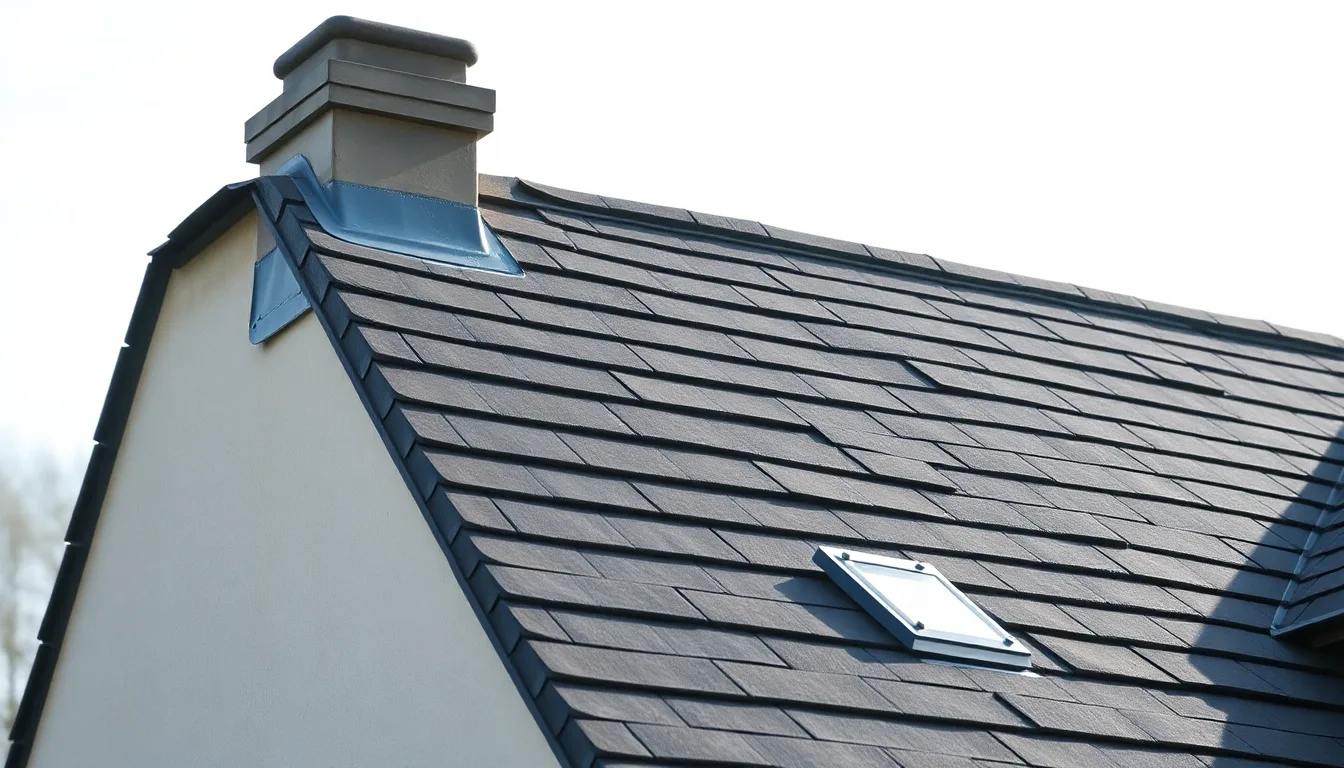
Chimney flashing is the one most people know, wrapped around the base of the stack in a stepped pattern that follows the brickwork. Valleys, where two roof slopes meet, often use a lead-lined channel to carry water away safely.
Abutments — where a roof meets a taller wall or an extension — need a similar treatment. So do dormer windows and the soakers tucked under individual tiles or slates near a verge. Every one of these is a point where two materials meet, and that’s always where a roof is most likely to leak first.
Signs Your Lead Flashing Is Failing
A pale, chalky patina on lead is normal. That’s just oxidisation forming a protective surface layer, and it’s nothing to worry about. However, cracking or splitting is different — that’s the metal fatiguing, usually after 40 to 60 years, and it needs attention.
Watch for edges lifting away from the mortar joint they were dressed into. That’s a common cause of chimney leaks, often turning up alongside loose or eroded pointing. Our Chimney Repointing & Repair: Costs, Signs and Process guide covers how the two problems tend to show up together.
A ceiling stain that appears after heavy rain, right below a chimney or valley, is the clearest sign of all. Don’t wait for it to spread before getting it looked at.
Why Lead Is Still the Right Material
Cheaper fixes exist. Self-adhesive flashing tape is quick to apply and fine as a short-term patch. Yet it typically only lasts five to ten years before it starts peeling at the edges. A cement fillet is worse — mortar is rigid, a roof moves slightly with heat and cold, and rigid material over a moving substrate cracks.
Roofers grade lead by thickness in “codes,” from Code 3 up to Code 8. Heavier codes go on larger runs or valleys that carry more water. Fitted at the right code and lapped correctly, it can genuinely last 50 years or more with no maintenance at all. That’s why it’s still specified on listed buildings and in conservation areas, not just out of tradition.
Repair, Renewal, or Something Else Entirely
Not every problem means stripping the whole run out. A section that’s lifted from the joint can often be re-dressed and re-fixed without replacing the lead itself. Small splits can sometimes be patched.
Once lead has cracked across a significant length, or corroded through in patches, patching stops being worthwhile. At that point it’s more sensible — and usually cheaper long-term — to renew the whole section in one go. A roofer who’s actually up there should be able to tell you which situation you’re in within minutes.
What Replacement Involves and What It Costs
Proper replacement means stripping the old lead back and checking the felt or membrane and timber underneath for rot. Additionally, it means fitting new lead with correctly sized laps and dressing it into the brickwork. Sometimes that means cutting a fresh chase into the mortar joint; sometimes you can reuse an existing one.
This is skilled work. Since nearby tiles or slates often need lifting to get the new lead seated correctly, it often becomes part of a wider Slate & Tile Roofing job. Costs vary a lot by scope. A single chimney flashing renewal typically runs from £300-£800. A full valley or abutment replacement on a larger roof, however, can run considerably higher depending on access and length.
Get more than one quote if the number feels high. Flashing work is one area where corners genuinely do get cut, and a bad job here fails again within a year or two.
Getting It Done Properly
If you’re not sure whether your flashing needs a repair or a full renewal, don’t guess from the ground. A proper inspection settles it in one visit, and it’s worth doing before it starts affecting the timber underneath. Our How Long Does a Roof Last? Tile vs Slate vs Flat Compared guide is a useful companion here, since flashing sometimes needs renewing well before the roof covering itself does.
This is especially relevant across Chislehurst’s older housing stock. Similarly, it’s just as true for the jobs we handle in Bromley and Petts Wood. If you’re timing flashing work alongside a wider re-roof, our Slate vs Concrete/Clay Tile Roofing: Pros, Cons and Cost guide is worth reading first. Homeowners near a listed chimney stack should also check our Roofing in a Conservation Area: The Rules for Chislehurst Homeowners guide before any work starts. Additionally, our What’s Included in a Professional Roof Survey & Report? guide explains exactly what a proper survey checks before you commit to either a patch or a full renewal.